1. The root problem: the Halal world has no “single standard”
Halal is based on Islamic law, but each country regulates it in its own way, with different competent authorities, standards and lists of recognised foreign certification bodies. According to an analysis by FoodNavigator (September 2026), even the Gulf states are not aligned: each still maintains its own Halal standard, despite the common GSO 2055-1 and GSO 2055-2 framework of the Gulf Standardization Organization.
As a result, exporters selling to several markets often need multiple certificates for the same product, adding cost and time. This is exactly the “pain point” that harmonisation initiatives are targeting.
2. Saudi Arabia: the Global Halal Mark and its ambition to be the “Halal hub”
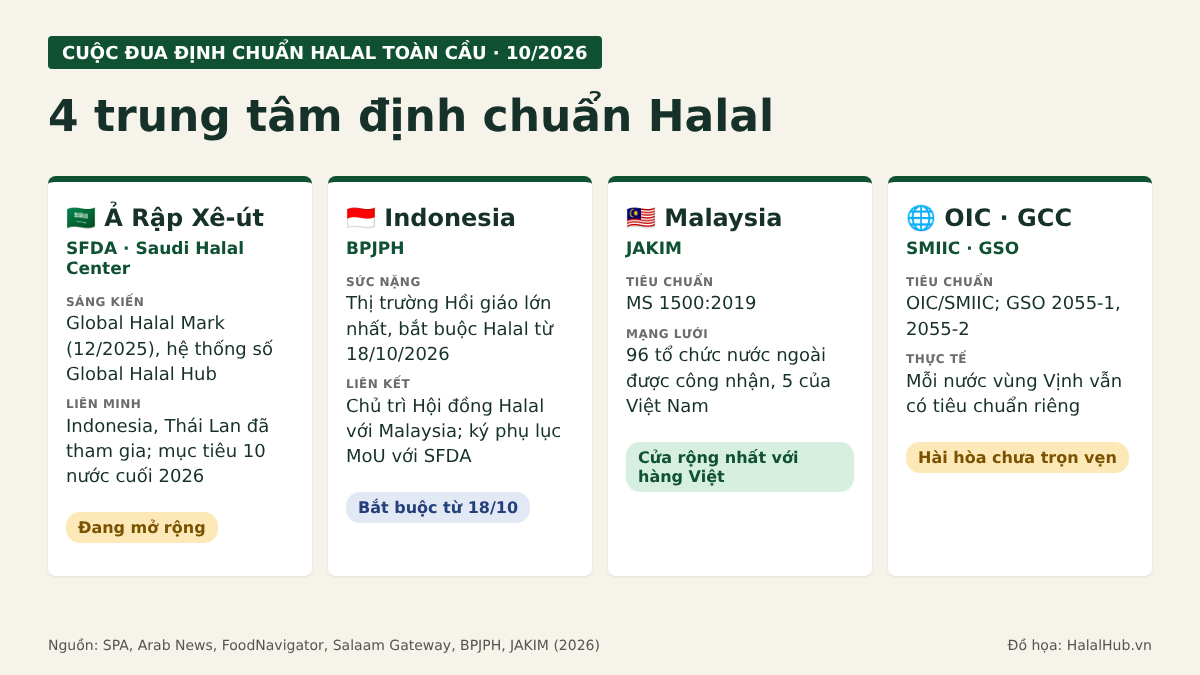
In December 2025, the Saudi Halal Center (part of the Saudi Food and Drug Authority – SFDA – system) launched the Global Halal Mark alliance, a common Halal mark recognised by member countries. According to Arab News, Indonesia and Thailand joined the alliance in 2026. Saudi Halal Center CEO Abdulaziz Al-Rushodi expects the alliance to reach 10 member countries by the end of 2026.
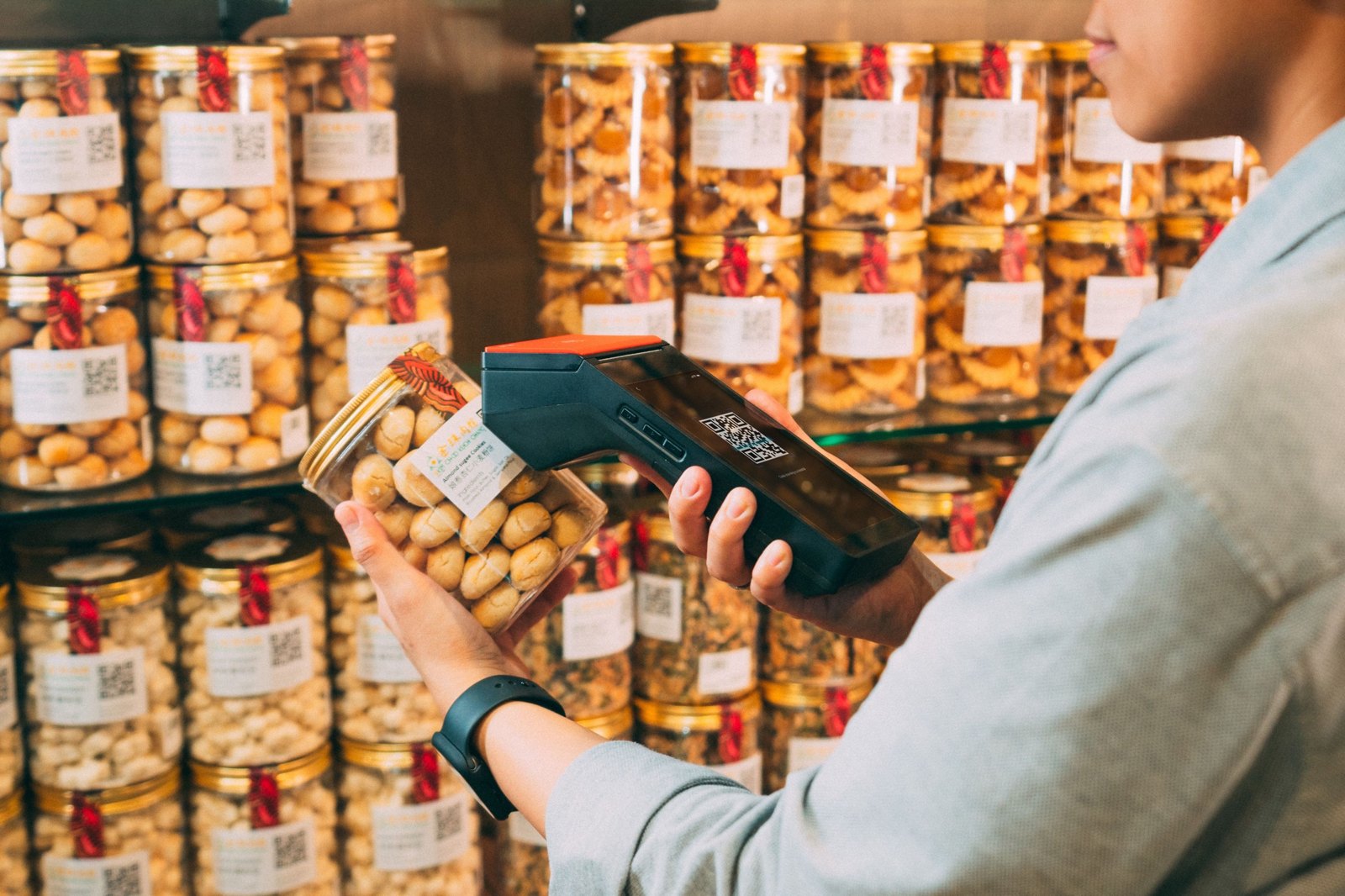
At the Makkah Halal Forum on 17 February 2026, SFDA and BPJPH (Indonesia) signed an addendum to their memorandum of understanding covering digital Halal systems, mutual recognition of the global Halal mark and QR-code verification, according to the Saudi Press Agency (SPA). On the same occasion, SFDA signed an MoU with the Central Islamic Council of Thailand (CICOT). The Saudi Halal Center also plans to build a Global Halal Hub digital system to unify certification data, and to set up a Halal Academy with the Islamic University of Madinah.
📌 KEY POINTS
Global Halal Mark: launched in December 2025, joined by Indonesia and Thailand, targeting 10 countries by the end of 2026.
SFDA – BPJPH: signed an MoU addendum on 17 February 2026 on digital Halal, mutual recognition of the global Halal mark and QR verification.
Vietnam: no information yet on joining this alliance.
3. The other “poles”: Indonesia, Malaysia and the OIC
- Indonesia (BPJPH): the world’s largest Muslim market, with mandatory Halal certification from 18 October 2026. Indonesia has joined the Saudi-led alliance while also leading the Malaysia – Indonesia Halal Council announced on 25 September 2026.
- Malaysia (JAKIM): has the MS 1500:2019 standard and, according to the Vietnam News Agency, as of 21 August 2026 its recognition network covered 96 foreign certification bodies in 49 countries and territories, including five from Vietnam.
- OIC/SMIIC: the Standards and Metrology Institute for Islamic Countries issues the OIC/SMIIC Halal standards. Vietnam’s Decree 127/2026/ND-CP requires certification bodies to apply recognised international standards such as OIC/SMIIC.
FoodNavigator notes that the Saudi model may face recognition challenges in markets where other religious authorities oversee certification, while Indonesia and Malaysia both see themselves as the leading certification hub. In other words, this race will run for some time, and a “single winner” is unlikely in the short term.
4. What it means for Vietnamese businesses
| System | Advantages for Vietnamese goods | Current limitations |
|---|---|---|
| JAKIM (Malaysia) | Five Vietnamese bodies recognised; can be done at home | No guarantee of acceptance in Indonesia or the Gulf |
| BPJPH (Indonesia) | Largest market; building links with Malaysia and Saudi Arabia | Vietnam has no MRA; extra inspection of every shipment |
| SFDA / Global Halal Mark | Could become a “common mark” if the alliance expands | Newly formed; Vietnam has not joined |
| MoIAT (UAE) | Double benefit with the Vietnam – UAE CEPA | Must use a MoIAT-registered body and check its validity regularly |
Source: compiled and analysed by HalalHub.vn. Information may change; businesses should check official portals.
🎯 STRATEGIC RECOMMENDATIONS
Short term (0–6 months): prioritise certification through a JAKIM-recognised body. This is the fastest and cheapest door, and it builds credibility when selling elsewhere.
By target market: if you sell into Indonesia or the UAE, you must also meet their specific requirements (BPJPH/SIHALAL and LPPH; or a MoIAT-registered body).
Medium term: follow the progress of the Malaysia – Indonesia Halal Council and the Global Halal Mark alliance. If these two mechanisms widen recognition, a JAKIM certificate could “travel” further.
Common foundation: build a Halal Assurance System (HAS) to the OIC/SMIIC standard so you can switch between systems easily when needed.
No Halal certification yet: where to start?
- Choose one first target market, then identify the certification bodies that country recognises.
- List your ingredients and suppliers, flagging risky components (gelatin, emulsifiers, flavourings, enzymes, alcohol).
- Compare against your existing food safety management system (HACCP, ISO 22000) to find what is missing for Halal.
- Get quotes and expected lead times from 2–3 certification bodies before signing a contract.
✅ EDITORIAL VIEW
There is no need to wait for a “single standard” before starting. A good Halal management system at the plant is an asset that works for any certification. Businesses that move early will only need to “add paperwork” when mutual recognition mechanisms expand, instead of starting from scratch.
Glossary
- SFDA (Saudi Food and Drug Authority): Saudi Arabia’s food and drug regulator.
- Saudi Halal Center: the body that initiated the Global Halal Mark alliance.
- Global Halal Mark: a common Halal mark recognised by the countries in the Saudi-led alliance.
- CICOT (Central Islamic Council of Thailand): Thailand’s Halal certification authority.
- GSO: the Gulf Standardization Organization, which issues the Halal standards GSO 2055-1 (food) and GSO 2055-2 (certification bodies).
- OIC/SMIIC: Organisation of Islamic Cooperation / Standards and Metrology Institute for Islamic Countries.
- BPJPH / JAKIM / MoIAT: the Halal regulators of Indonesia / Malaysia / the UAE.
- MoU: memorandum of understanding. MRA: mutual recognition agreement.
- HAS (Halal Assurance System): the Halal assurance system at a production facility.
References
Legal texts and official sources
- SPA (Saudi Press Agency) – SFDA Expands Partnership with Indonesia’s Halal Product Assurance Organizing Agency
- HALCERT – Decree 127/2026/ND-CP: a new step in managing and developing the Halal market in Vietnam (Vietnamese)
- JAKIM – List of recognised foreign Halal certification bodies (available at https://www.halal.gov.my)
Press and industry analysis (secondary sources, cited as published)
- FoodNavigator (21 September 2026) – One halal standard to rule them all? Saudi Arabia’s trillion-dollar bet
- Arab News – Indonesia and Thailand join Saudi-led Global Halal Mark alliance
- Arab News – Saudi food safety watchdog signs MoU with Central Islamic Council of Thailand
- Salaam Gateway – Saudi Halal Center expands Global Halal Mark alliance as more countries join
- Salaam Gateway – Malaysia and Indonesia launch bilateral halal council on Day 3 of MIHAS 2026
- Vietnam News (VNA) – Việt Nam has five Halal certification bodies recognised by Malaysia
Photos: Unsplash (Unsplash licence). Graphics: HalalHub.vn.
HalalHub.vn Editorial Team · Published 17 October 2026 · Legal information checked as of 17 October 2026; regulations may change, so please check official sources before making decisions.
ℹ️ ABOUT HALALHUB.VN’S INDEPENDENCE
HalalHub.vn is a connection and information platform. HalalHub.vn is not a Halal certification body and does not issue Halal certificates. Halal certificates are issued by certification bodies recognised by the competent authority of the importing country (for example, BPJPH in Indonesia, or bodies recognised by JAKIM in Malaysia). This article is for reference only and does not replace legal advice.
📎 HOW TO CITE THIS ARTICLE
HalalHub.vn Editorial Team (2026, 17 October 2026). The global race to set Halal standards: Saudi Arabia launches the “Global Halal Mark” – where should Vietnamese businesses place their bets?. HalalHub.vn. Retrieved from: https://halalhub.vn/tin-tuc/global-race-to-set-halal-standards-global-halal-mark
HalalHub.vn services
🤝 CONNECT WITH HALALHUB.VN
Businesses with Halal certification: sign up as a member and create a company profile in the HalalHub.vn directory, stating the issuing body, scope and validity of your certificate so partners can assess it easily.
Businesses without certification: follow the News and Knowledge sections of HalalHub.vn for updates on regulations and certification roadmaps for each market.
Register at: https://halalhub.vn