HalalHub.vn · In-depth analysis · 26 October 2026
(HalalHub.vn) – With the Vietnam–UAE CEPA in force since February 2026 and Vietnam’s National Halal Certification Center (HALCERT) accredited by the GCC Accreditation Center (GAC), Vietnamese goods have more favorable conditions for entering Gulf Cooperation Council (GCC) markets. At the same time, Gulf countries are updating their Halal food standard with stricter requirements. This article examines the opportunities, emerging requirements and steps businesses can take.

Dubai, UAE. The Gulf is a major food import market and a re-export gateway to the Middle East and Africa. Photo: Unsplash.
1. HALCERT receives GAC accreditation: What does it mean?
At the Vietnam Halal Tourism Conference in Nha Trang on 8 July 2026, HALCERT received a certificate of accreditation for its Halal certification competence from the GCC Accreditation Center (GAC), according to VietQ and HALCERT’s website. These sources say the accreditation is based on the Gulf standard GSO 2055-2 for Halal certification bodies and OIC/SMIIC standards. HALCERT’s system was assessed against ISO/IEC 17065, ISO 9001 and TCVN 13888.
GAC is the accreditation body of the GCC countries. Accreditation of a Vietnamese certification body by GAC is a step forward in credibility and competence, creating more possibilities for Halal certificates issued in Vietnam to be accepted in Gulf countries.
| 🔎 AN IMPORTANT DISTINCTION GAC accreditation does not mean every HALCERT certificate is automatically accepted in each GCC country. Each country has its own mechanism: for example, UAE certification bodies must be on the MoIAT registered list, while Saudi Arabia requires designation by SFDA. Businesses should ask HALCERT about its specific accreditation scope and check the importing country’s list before shipment. |
2. GSO 2055-1:2026: What may change
On 17 February 2026, the GCC Standardization Organization (GSO) published a draft of GSO 2055-1:2026 on general requirements for Halal food, updating the 2015 version. According to the GSO project page, the standard covers all stages of the Halal food chain, from receipt of ingredients to food service. ChemLinked identifies the following noteworthy proposed changes:
| Issue | Implications for exporters |
| Tighter control of prohibited substances | Carefully review additives, flavorings, enzymes and carriers of animal origin or containing alcohol. |
| Halal certification for each shipment of high-risk animal products | For meat, poultry and animal products, prepare Halal documentation for each shipment, not only facility certification. |
| Strict segregation and hygiene | Clearly separate Halal and non-Halal production flows and maintain hygiene records. |
| Facility conversion procedures | Facilities previously producing non-Halal products must comply with conversion procedures before Halal production. |
Source: HalalHub.vn, compiled from GSO and ChemLinked. The draft is not a final standard; its final content may change.

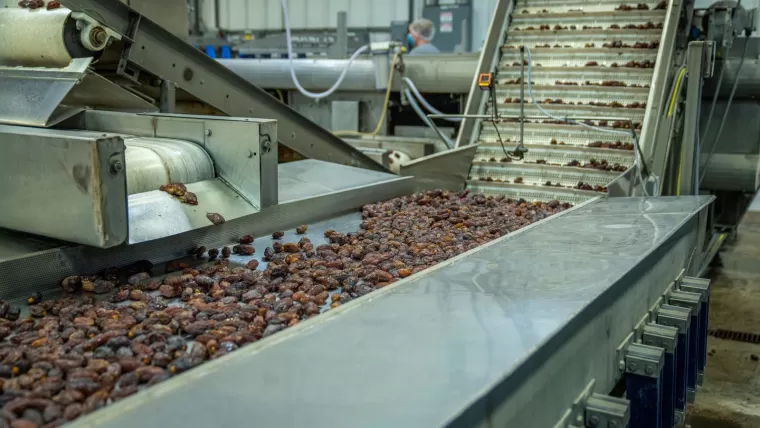
Segregation and hygiene in production are central to the GSO 2055-1 update. Illustrative photo: Unsplash.
3. Connecting the pieces: CEPA, certification and standards
For the UAE market, Vietnamese businesses now have three favorable conditions: tariff preferences under the Vietnam–UAE CEPA, effective from 3 February 2026, under which the UAE committed to eliminating tariffs on 94.9% of tariff lines; a domestic certification body accredited by GAC; and a draft standard offering advance insight into the rules ahead. According to the Vietnam Trade Office in the UAE, the UAE produces only around 10–15% of its food needs, creating considerable room for imports.
4. What should businesses do?
Identify the specific GCC destination, such as the UAE, Saudi Arabia or Qatar, and check that the certification body is accepted there.
Ask the certification body about the scope of recognition or accreditation, including GAC, MoIAT and SFDA, for the relevant product group.
Review the facility against the direction of draft GSO 2055-1:2026: segregation, hygiene, ingredient records and conversion procedures if it has previously produced non-Halal goods.
Prepare a UAE-VN certificate of origin to claim CEPA preferences when exporting to the UAE.
Monitor the final GSO 2055-1:2026 standard and update procedures promptly.
5. Conclusion
The gateway to the Gulf is widening, but standards are also becoming more demanding. Businesses that use CEPA preferences, select the right certification body and prepare for the requirements of GSO 2055-1:2026 will be better positioned as GCC markets tighten controls.
Glossary
GCC (Gulf Cooperation Council): the UAE, Saudi Arabia, Qatar, Kuwait, Oman and Bahrain.
GAC (GCC Accreditation Center): the Gulf accreditation body that assesses and accredits certification bodies.
GSO 2055-1 / GSO 2055-2: Gulf standards for general Halal food requirements / requirements for Halal certification bodies.
ISO/IEC 17065: an international standard specifying requirements for product certification bodies.
HALCERT: Vietnam’s National Halal Certification Center.
MoIAT / SFDA: the UAE / Saudi Arabian Halal regulatory authorities.
CEPA: the Vietnam–UAE Comprehensive Economic Partnership Agreement. C/O: certificate of origin.
References
Legal texts and official sources
GSO – GSO TC15/DS1 2055-1:2026 – Standards Projects
HALCERT – HALCERT receives certification body accreditation from the GCC Accreditation Center (GAC)
Press and industry analysis (secondary sources, cited as published)
ChemLinked – GCC Standardization Organization to Update Standard for General Halal Food Requirements
Journal of Economics and Finance – Export opportunities for key industries in the Middle East
Photos: Unsplash (Unsplash License).
HalalHub.vn · Published on 26 October 2026 · Legal information checked as of 26 October 2026; regulations may change. Consult official sources before making decisions.
| ℹ️ ABOUT HALALHUB.VN’S INDEPENDENCE HalalHub.vn is a platform for connections and information. HalalHub.vn is not a Halal certification body and does not issue Halal certificates. Halal certificates are issued by bodies recognized by the competent authority in the importing country (for example, BPJPH in Indonesia and bodies recognized by JAKIM in Malaysia). This article is for reference and does not replace legal advice. |
HalalHub.vn service information
| 🤝 CONNECT WITH HALALHUB.VN Already Halal-certified: register and create a business profile in the HalalHub.vn directory, specifying the issuing body, scope and validity of your certificate so partners can assess it. Not yet certified: follow HalalHub.vn’s News and Knowledge sections for regulatory updates and certification roadmaps for each market. Register at: https://halalhub.vn |