HalalHub.vn · In-depth analysis · 18 November 2026
(HalalHub.vn) – Malaysia aims to trace the entire Halal supply chain using AI, blockchain and IoT; Indonesia has certified over 15.4 million products through SIHALAL; and Sarawak has proposed blockchain for cross-border verification. Many Vietnamese businesses still send scanned certificates to partners. This article examines digital certification trends and the data businesses should prepare now.
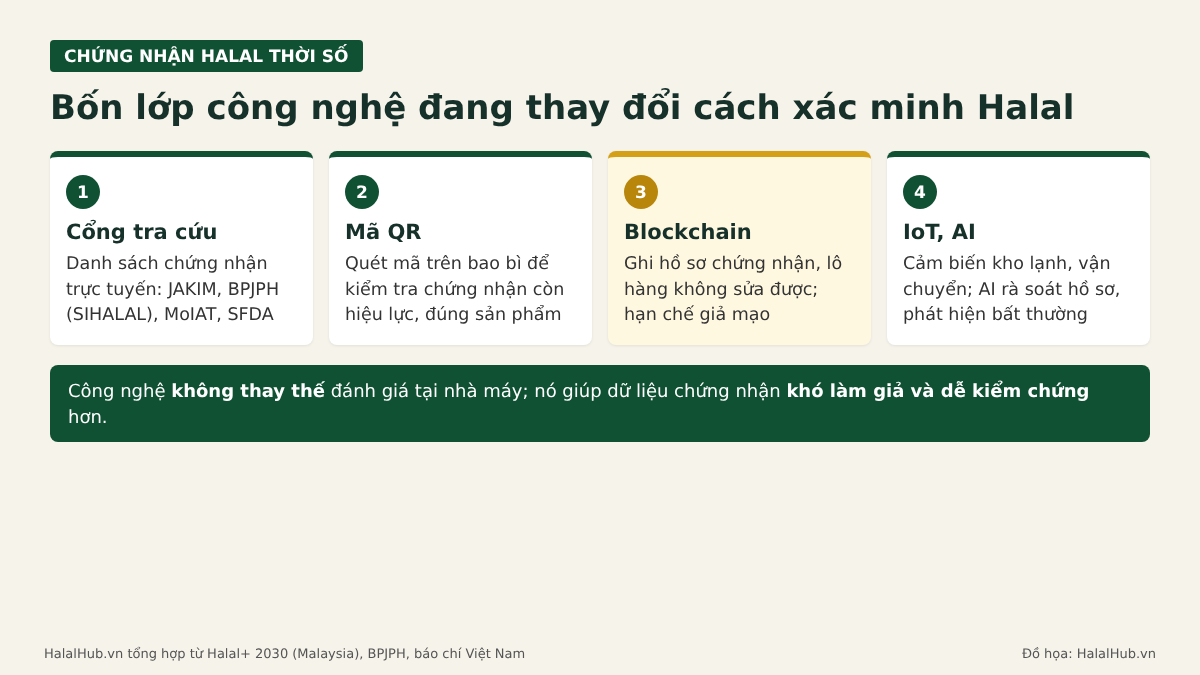
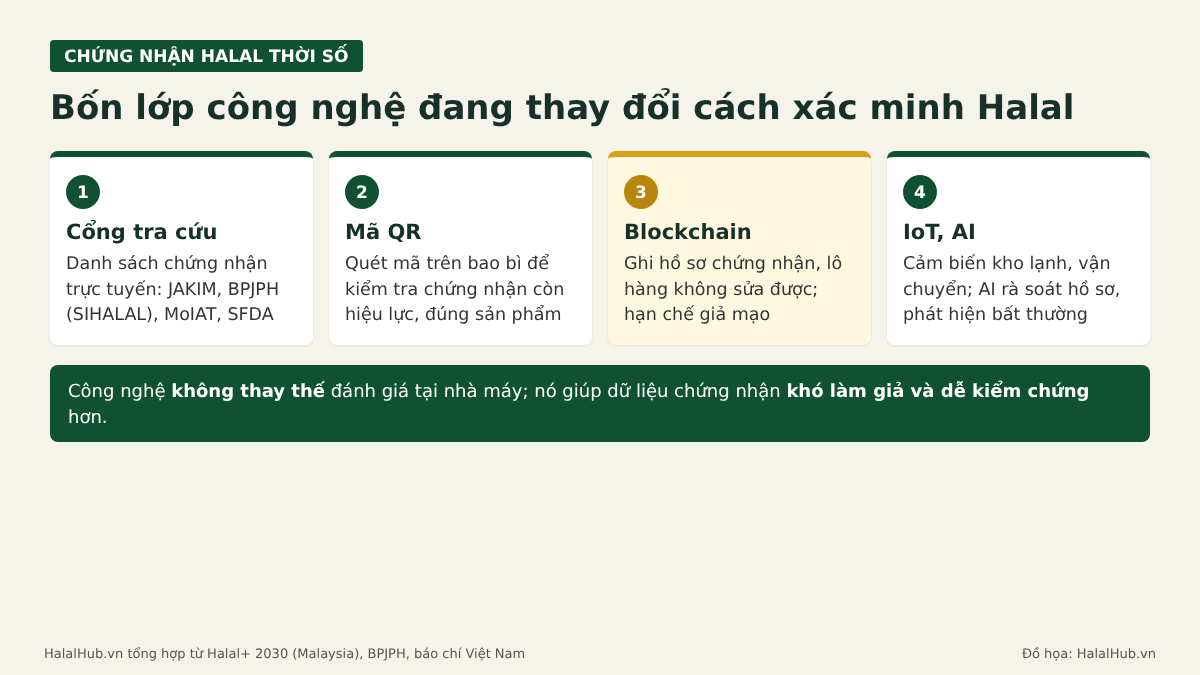
Four technology layers changing Halal verification. Graphic: HalalHub.vn.
1. Why Halal certification needs to go digital
Recent cases expose weaknesses in paper certification. On 16 November 2026, Malaysian authorities seized 27,000 hair dye bottles whose advertised Halal certificate belonged to another company. Other cases involve expired certificates or use outside scope. A scan alone does not tell buyers whether certification is current or covers the product.
Digitalization addresses this by enabling direct checks against source records, making certificates harder to falsify and easier to match with shipments.
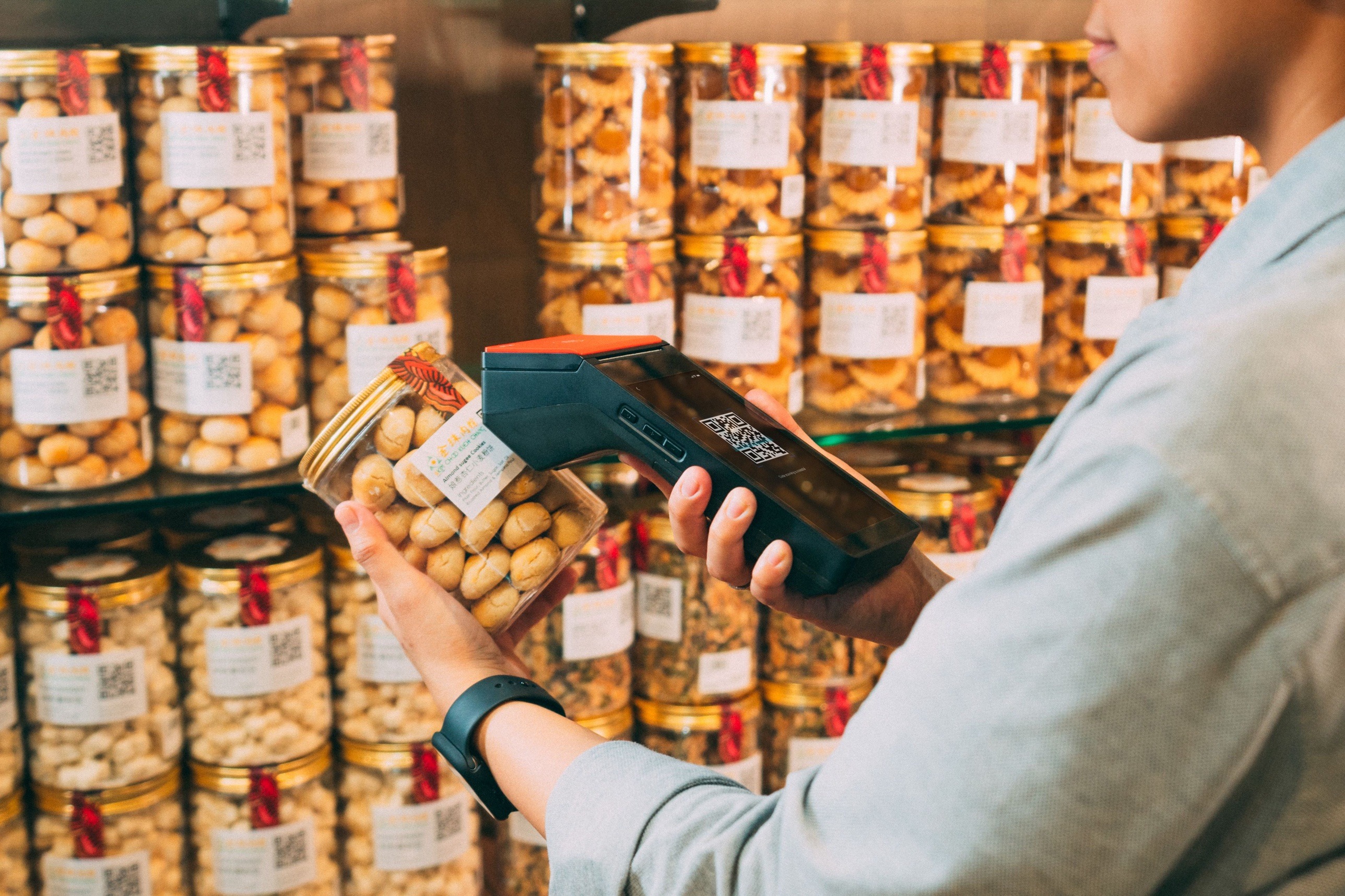
A product-label QR code helps buyers check information, including whether Halal certification remains valid and covers the product. Illustrative photo: Pexels.
2. What countries are doing
| Country or market | Digital direction |
| Malaysia | Malaysia Halal Portal certificate-status checks; Halal+ 2030 targets AI, blockchain and IoT traceability throughout the chain; Sarawak proposed blockchain for cross-border verification in November 2026. |
| Indonesia | Certification and foreign-certificate registration through SIHALAL; electronically signed foreign-certificate registration numbers; over 15.4 million certified products as of November 2026. |
| UAE and Saudi Arabia | Online recognized-body lists from MoIAT and the SFDA Halal Center allow importers to cross-check. |
| Vietnam | Decree 127/2026/ND-CP requires traceability for high-risk Halal product groups and mandates a national database; some businesses and certification bodies have piloted blockchain for ingredient verification, according to Tuoi Tre in February 2025. |
Source: HalalHub.vn, compiled from The Sun, DayakDaily, ANTARA, BPJPH, Decree 127/2026/ND-CP and Tuoi Tre.
3. Blockchain: Set realistic expectations
| ⚖️ WHAT BLOCKCHAIN CAN AND CANNOT DO It can: store certificate and shipment records resistant to alteration; share a common data source; help identify forged or expired certificates. It cannot: turn false inputs into true data. If non-Halal ingredients are declared Halal at entry, blockchain merely retains that false declaration. Factory assessments, supplier controls and periodic surveillance remain the foundation; technology helps communicate those results more reliably. |
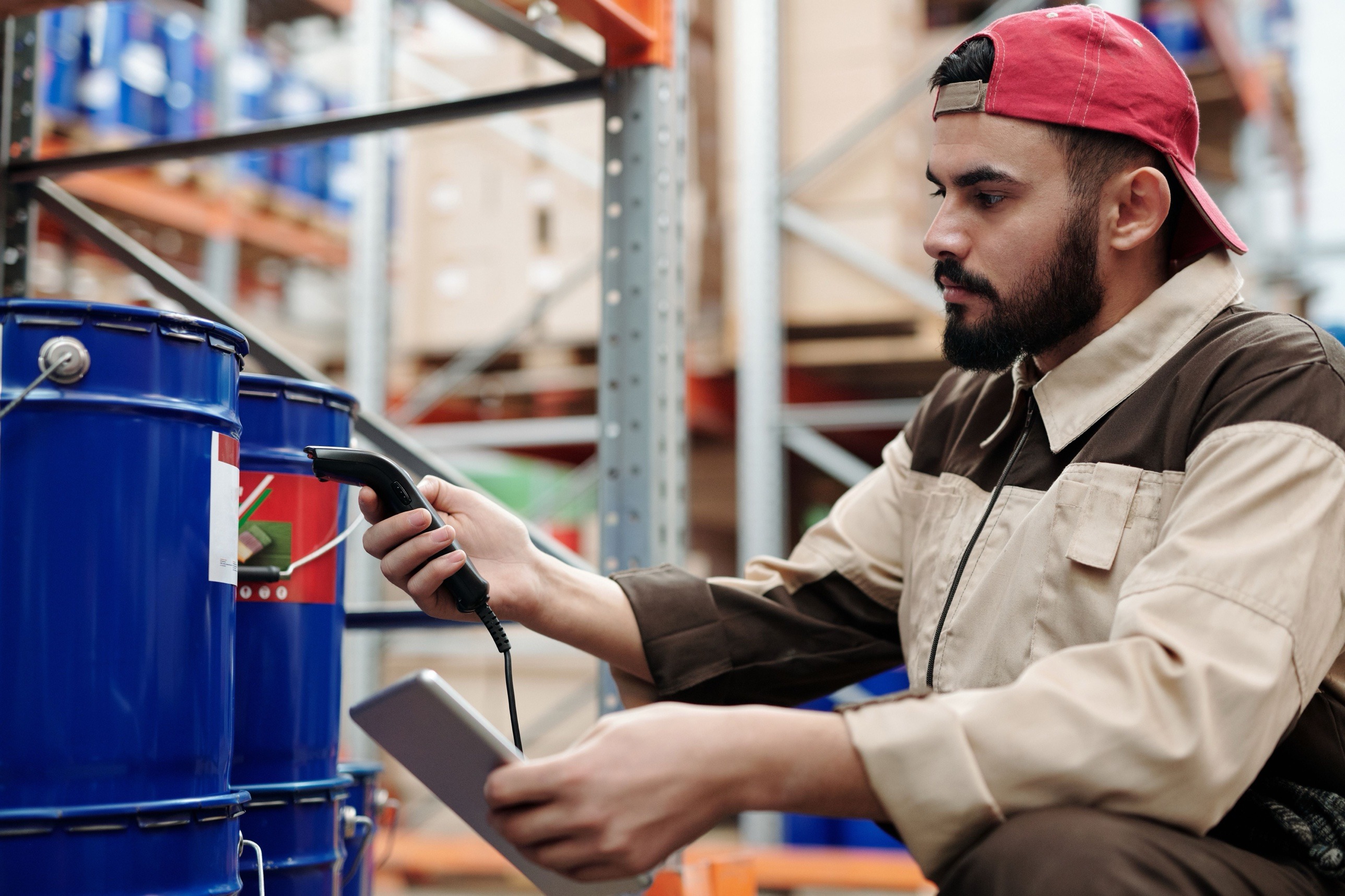
Shipment and logistics data are important to Halal traceability. Illustrative photo: Pexels.
4. What data should Vietnamese businesses prepare?
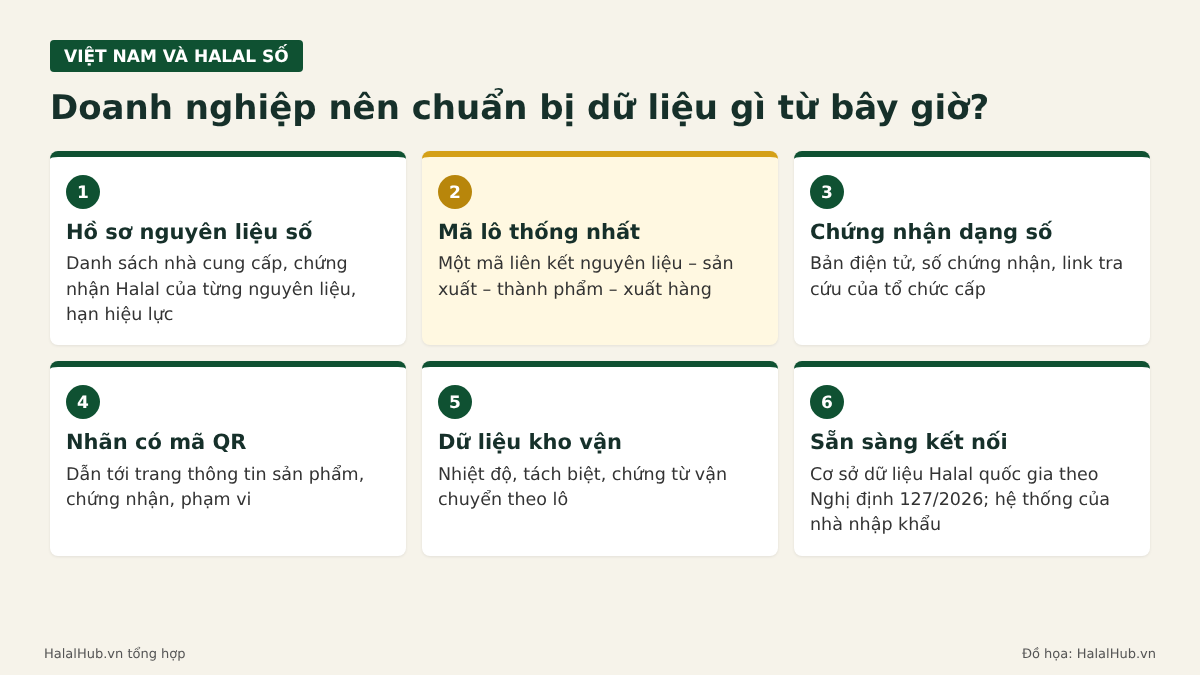
Six data groups to prepare for digital Halal. Graphic: HalalHub.vn.
1. Digitize ingredient records: supplier lists with Halal certificates and validity dates for each ingredient.
2. Use a consistent batch identifier from ingredients through finished goods and shipping documents.
3. Store digital certificate details: certificate number and the issuer’s verification link.
4. Consider label QR codes linking to product and certificate information, only for products within scope.
5. Record logistics data: temperatures, segregated areas and batch-specific transport documents.
6. Monitor the national Halal database under Decree 127/2026 and prepare to connect when implemented.
| 🇻🇳 START SMALL AND GET IT RIGHT Businesses need not immediately invest in blockchain. Standardized data, consistent batch codes and certificates with verification links already address much of buyers’ verification needs. Data will then be ready when national or importer platforms require integration. |
5. Conclusion
In Halal trade, trust is shifting from paper stamps to verifiable data. Businesses standardizing data today can negotiate more smoothly, reduce doubts over certification and prepare for widespread digital traceability requirements.
Glossary
Blockchain: distributed-ledger technology making recorded data difficult to alter.
IoT: networked devices and sensors, such as cold-storage temperature sensors.
SIHALAL: BPJPH’s online Halal certification and registration system in Indonesia.
Batch code: an identifier for a production batch, used in traceability.
National Halal database: the data system mandated under Decree 127/2026/ND-CP.
References
Official and primary sources
Press and industry analysis (secondary sources, cross-checked by HalalHub.vn where possible)
The Sun – Malaysia launches Halal+ 2030 to boost global halal economy with digital innovation
DayakDaily – S’wak urged to explore blockchain halal verification to boost SME cross-border trade
ANTARA – Ministry boosts synergy for 2028 mandatory halal certification roadmap
Tuoi Tre News – Vietnamese firms employ blockchain to support Halal market penetration
ITPC – Unlocking Halal markets for Vietnamese exports
Bernama – KPDN Seizes 27,000 Hair Dye Bottles Over Suspected Misuse Of Halal Logo
Illustrative photos: Unsplash and Pexels (free licenses). Graphics: HalalHub.vn.
HalalHub.vn · Dated 18 November 2026 · Legal information checked as of 18 November 2026; regulations may change. Businesses should consult original legal texts before implementation.
| ℹ️ ABOUT HALALHUB.VN’S INDEPENDENCE HalalHub.vn is not a Halal certification body and does not issue certificates. Articles provide reference information; HalalHub.vn does not accept payment to name businesses or certification bodies in its articles. |
HalalHub.vn service information
| 🤝 CONNECT WITH HALALHUB.VN Already certified: register and create a business profile in the HalalHub.vn directory, stating the issuing body, certification scope and validity. Not yet certified: follow News and Knowledge for market-specific regulations and timelines. Register at: https://halalhub.vn |